



| Title/Author | ||
|
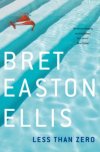
Less Than Zero Bret Easton Ellis
|
||
| Book Details | ||
|
||
| Publisher's Write-Up | ||
|
Clay comes home to L.A. for Christmas vacation and re-enters a landscape of limitless privilege and moral entropy, where everyone drives Porsches, dines at Spago, and snorts mountains of cocaine. He tries to renew feelings for his girlfriend, Blair, and for his best friend from high school, Julian, who is careering into hustling and heroin. Clay's holiday turns into a dizzying spiral of desperation that takes him through the relentless parties in glitzy mansions, seedy bars, and underground rock clubs. Morally barren, ethically bereft and tinged with implicit violence, Less Than Zero is a shocking coming-of-age novel about the casual nihilism that comes with youth and money. 'An extraordinarily accomplished first novel.' New
Yorker
'One of the most disturbing novels I've read in a long time. It possesses an unnerving air of documentary reality.' New
York Times
'The Catcher in the Rye for the MTV generation.' USA
Today
|
||
| Column Ends |
space
| Reader Reviews | |
Review by Martin Reiter (310311) Rating
(4/10) Review
by Martin Reiter  Review
by Ben Macnair 25 years after it was first published, the book still has the power to shock, but its controversy has been somewhat tempered by changes in the world since. It centres around Clay, an eighteen year old student returning to his home for the Christmas holidays. It looks at his relationship with his girlfriend, Blair, his parents, and sisters, who are older than their years, and it also looks at the lives of his friends, Daniel, Julian, and a stream of others who seem to be film makers, or models, or concerned about their tans, in December. The novel shows the transient nature of friendships for late teenagers, many of whom have moved away, and the seemingly never ending bed-hopping, drug taking and partying does not seem to end, although Easton Ellis, who was little older than is characters when he wrote the book is careful not to judge his characters, that is left to the reader. The darker-underbelly of the glamour is also looked at, with allusions to Anorexia, or the work that Julian has to do to pay of a debt he owes to one of his dealers.
There are no happy endings for anyone, or neat resolutions. Clay
leaves, expecting things not to change, but knowing that they
will. You fear for the lives and sanity of many of the characters,
but their lives are followed in this year’s Imperial Bedrooms
(2010) , but they are people you might not want to spend
that much time in the company of. Review
by Simon Rowley The novel is written in mesmerising blank prose as Clay describes the sometimes shocking and disturbing events happening around him with little to no emotion and startling apathy. No chapter lasts more than a few pages and, written in large type and lasting only 195 pages, it is very easy to read. Constantly changing setting and characters, this has the effect of watching three-minute pop music videos on MTV, resulting in it being called the very first 'MTV Novel.' One of the most striking aspects of the book is its intentional lack of a traditional narrative. There is no real story to speak of, just a long sequence of events that build up to create a very powerful effect on the reader, as Clay's world of drugs and sex becomes more and more surreal and hellish. It is sometimes claimed that Less Than Zero is the Catcher in the Rye for the MTV generation, and it isn't hard to see why. As Salinger's novel was the defining literary work for the disillusioned youth of the 1950's, Less Than Zero perfectly sums up the feeling and zeitgeist of the lost generation of the Reagan Eighties. The large cast of characters, all spoiled rich kids with yuppie parents, have everything they could ever want for in life, yet remain depressed and bored, living for nothing more than their next cheap kick. Clay's mantra throughout the novel, 'Disappear Here', becomes a memorable slogan for the hopelessly lost Generation X. It is all the more incredible that Ellis wrote this when he was 21 years old and still at college, and the fact that the novel began as an assignment for a creative writing course. Less Than Zero was considered controversial upon its release in 1985 for its detailed portrayal of sex, drugs and violence among the youth of Los Angeles, foreshadowing the massive controversy that would surround Ellis's later works, in particular the infamous American Psycho.
Less Than Zero is by no means a perfect novel, and Bret
Easton Ellis would go on to write bigger and better books later
on in his career, but this is the defining work of the literary
Brat Pack of the 1980's and an incredibly powerful, captivating
read. Not for the faint of heart. |
|
| Column Ends |
space


 4/10
4/10 7/10
7/10 8/10
8/10