



| Title/Author | ||
|
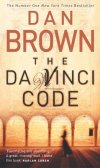
The Da Vinci Code Dan Brown
|
||
| Book Details | ||
|
||
| Publisher's Write-Up | ||
|
Robert Langdon, Harvard Professor of symbology, receives an urgent late-night call while in Paris: the curator of the Louvre has been murdered. Alongside the body is a series of baffling ciphers. Langdon and a gifted French cryptologist, Sophie Neveu, are stunned to find a trail that leads to the works of Da Vinci - and further. The curator, part of a secret society named the Priory of Sion, may have sacrificed his life to keep secret the location of a vastly important religious relic hidden for centuries. It appears that the clandestine Vatican-sanctioned Catholic sect Opus Dei has now made its move. Unless Landon and Neveu can decipher the labyrinthine code and quickly assemble the pieces of the puzzle, the Priory's secret - and a stunning historical truth - will be lost forever. |
||
| Column Ends |
space
| Reader Reviews | |
Review by Nadine (300904) Rating (8/10) Review
by Nadine What follows is essentially a treasure hunt, but one that, if solved, could alter civilisation as we know it and pull the bulk of western religion apart at the seams. There are two ways to read the book. You can either fry your brain trying to solve the clues and riddles before the hero does, or you can do what I did: Lie back in the sun with a nice drink and be happily spoon fed. This is ideal holiday reading - it has its clever moments, and it's certainly thought provoking, but it doesn't require a great deal of concentration, or indeed intelligence, to follow what's going on. I have heard the ending described as anti-climactic, but I must say that I didn't think so. Obviously I won't disclose any details, but in my ever-increasing cynicism I fully expected a wild goose chase, culminating in a thoroughly disappointing damp squib. In fact I found it rather satisfying – complete with a rather neat plot twist and an uplifting discovery that leaves the reader something to think about. I would love to know how much of the historical background is true. The novel presented many ideas about the origins of Christianity in such a compelling manner that I can't help feeling there might be something in it. Afterwards I found myself trawling the Internet for images of Da Vinci's art, and scrutinising them for details described in the book. If anything the story enforced my belief that modern organised religion is more mouth than trousers and left me with a sudden interest in taking up Paganism! Now for the bad points. At worst, it could be considered rather formulaic. At times I had the impression that the author had "How to Write a Bestseller" propped up on the desk while he wrote. But why not? The established pattern of twists, mysteries, car chases and romantic interludes exists because it makes good reading. And the plot is original enough to make up for any predictability in the style. I could also have wished that the two main characters had a bit more personality. They were likeable enough but they didn't seem all that real, and the relationship that gradually developed between them was the least-convincing love story since Anakin Skywalker and Senator Amidala. Ironically, the most well developed character in it was the murderer. Ruthless and obsessive, but thoroughly misguided, I ended up feeling quite sorry for him.
Overall, The Da Vinci Code may not be an outstanding
example of literary style and originality, but it is
thoroughly entertaining and very easy reading. The pages turn
themselves and the hours fly by. In short, it's fun.  |
|
| Column Ends |
space


 8/10
8/10